
Sunrise in Florida can feel like a stage cue. Mangroves hold the last of the night, the water turns to copper, and a great blue heron lifts off with slow, sure wingbeats. If you’ve ever raised a camera and thought, “Please, don’t blink,” you’re in the right place.
This guide helps photography lovers plan a simple, successful bird photography trip in Florida, without overthinking it. Florida serves up shorebirds, wading birds, raptors, and backyard regulars all year. Still, winter visitors and spring movement often bring the most action.
You’ll get clear advice on when to go, where to shoot, what settings work, and how to stay respectful, so birds keep acting like birds, not like startled subjects.
Plan your shoot around Florida’s light, seasons, and bird behavior
Florida rewards planning more than fancy gear. Light changes fast near water, birds follow food, and small choices add up. Arrive early, stay a little late, and watch before you shoot. You’ll start predicting the next step, the next strike, the next takeoff.
First, treat the day like two short shoots, not one long one. Dawn gives softer light, lower contrast, and calmer air. Late afternoon can be just as good, especially when side light brushes feather detail and brings out shape. Midday can work, but it’s harder; bright sand and white birds can fool your meter.
Next, think like a bird. Feeding birds repeats patterns. A snowy egret often pauses, then shuffles, then strikes. Ospreys hover, then commit. Brown pelicans give tells before a dive. When you learn the rhythm, you stop chasing frames and start catching moments.
Here’s a quick checklist you can screenshot before you walk out the door:
- Time: Sunrise first, then the last 90 minutes before sunset
- Weather: Light clouds help, strong wind helps with flight shots
- Tide (coast): Moving water concentrates feeding birds
- Background: Step left or right until it cleans up
- Distance: Stay far enough that birds keep their normal behavior
- Plan B: If light is harsh, switch to silhouettes or behavior
If birds keep looking at you, you’re too close. Relax the scene first, then take the photo.
Best times of year for bird photography in Florida (and what you’ll see)
Florida’s “best season” depends on what you want in the frame.
Winter (Nov to Mar) brings migrants, cooler mornings, and longer golden light. Look for sandpipers and other shorebirds on flats, plus terns and brown pelicans along the coast. Raptors can be active too, including osprey and bald eagles.
Spring (Mar to May) often means nesting color and busy courts. Roseate spoonbills can show bright tones, while great blue herons, egrets, and wood storks may be carrying sticks or feeding young. The behavior is half the story.
Summer (Jun to Sep) can still be strong, especially around rookeries and wetlands. You’ll see anhingas drying wings, limpkins near shallow edges, and plenty of young birds learning the basics. Storms build fast, so plan short outings and watch the sky.
Fall (Sep to Nov) marks the start of the southbound shift. You’ll catch movement again, plus fresh plumage on some species. Light can be beautiful after rain.
One practical note: heat, humidity, and bugs change the experience. Pack water, sun protection, and insect repellent, even on short shoots.
Read the scene like a photographer: sun angle, wind direction, and tides
Light is your paint, so place it on purpose. For clean color, keep the sun at your back and aim for a catchlight in the eye. When you want texture, move so light hits from the side. Feathers turn into tiny ridges, and the bird gains shape.
Wind matters more than most people expect. Many birds take off into the wind because it helps them lift. If you want flight shots, stand upwind when it’s safe and allowed to do so. You’ll get more head-on approaches and fewer tail-away frames.
On beaches, mudflats, and shallow lagoons, tide timing can make the day. As water rises, birds may pack into narrow feeding zones. As it falls, they spread out and wander. Either can work, but concentrated birds help you practice framing and focus.
Safety stays part of the craft. Florida lightning can arrive without warning, and heat can sneak up during long waits. If thunder rumbles, head to shelter. If you feel sluggish or dizzy, stop and cool down.
Where to photograph birds in Florida without wasting a day driving
Florida is wide, and traffic can steal your best light. Instead of chasing a long checklist of famous spots, pick a region, then build a tight plan: one sunrise location, one backup location, and one sunset location close by.
Also, arrive earlier than you think you need. Parking fills at popular boardwalks and wildlife drives, especially on weekends in winter. When you get there, take ten minutes to scout. Look for where birds land, where people stand, and where the background stays clean.
A simple rule helps: choose places that let you work slowly. Boardwalks, dikes, and auto loops are friendly for beginners with long lenses. Open beaches can be wonderful too, but they require more attention to the tide, wind, and foot traffic.
Coasts, wetlands, and rookery hotspots: a simple map in your head
Think in five broad zones, then match them to your goals.
South Florida offers mangroves, marsh edges, and big waders. It’s a strong area for spoonbills, herons, egrets, and wood storks. The Everglades region can be productive, especially when water levels shape feeding.
Central Florida is home to lakes, wetlands, and marshy parks. Expect anhingas, limpkins, and plenty of wading birds. Calm ponds also make reflections easier.
Gulf Coast often shines with warm sunset light and wide skies, making it a prime spot for wading birds and shorebirds. Look for shallow flats and protected bays.
Atlantic Coast can be great for pelicans, terns, and inlet action, where fish concentrate, and birds cycle through again and again.
The Panhandle adds coastal dunes, bays, and raptors, depending on habitat and season.
Many state parks, wildlife refuges, and water management areas include boardwalks and auto loops. Those features let you shoot comfortably without pushing too close.
Local secrets that still feel wild: small parks, boat ramps, and your own backyard
You don’t need a famous location to make a strong photo. A neighborhood pond can deliver repeat chances, which is how you improve fast. Go twice, learn the patterns, then refine your approach.
Use eBird to spot recent sightings, then confirm access rules and opening hours. Local birding groups can help too, especially for seasonal timing. Still, skip sharing exact nest locations, and don’t crowd rookeries. Birds need calm to raise young.
Low-effort places that often pay off include fishing piers, quiet boat ramps (stay out of the way), kayak trails at sunrise, and retention lakes with a safe walking path. Even your backyard can become a set if you add a simple water source and keep the area quiet.
Get sharp, story-filled bird photos with simple gear and settings
Sharpness starts before the shutter. Stabilize your stance, breathe, and track the bird’s head. Then shoot in short bursts, not endless spray. Short bursts keep your timing honest and your buffer happy.
Composition matters just as much. Try to place the bird’s eye away from the center, and leave space in the direction it’s looking or moving. Clean backgrounds make average birds look rare.
Most of all, aim for behavior. A pelican tossing a fish, an egret flaring wings to brake, an osprey shaking water mid-air, these frames feel alive because something is happening.
Gear that helps most in Florida, from lens choice to rain protection
A 300-600mm lens range covers most Florida bird situations. A longer reach helps on open beaches and in big wetlands. A teleconverter can help, but autofocus may slow, and sharpness can dip, especially in heat shimmer.
Support can be simple. A monopod works well on boardwalks and dikes, while a tripod helps for long waits and heavy lenses. If you walk a lot, a light backpack saves your shoulders.
Florida conditions ask for a few extras: a microfiber cloth for spray, a rain cover for sudden showers, and a lens hood for glare and light rain. Add bug spray, sunscreen, and more water than you think you’ll drink. A phone is also useful for quick habitat shots and behavior notes.
Quick settings cheatsheet: perched birds, waders, and fast flyers
Start with these settings, then adjust for light and motion. This table is a baseline, not a rule.
| Situation | Shutter speed | Aperture | ISO | AF mode | Extra note |
|---|---|---|---|---|---|
| Perched birds | 1/500 to 1/1000 | f/5.6 to f/8 | Auto (cap if needed) | AF-C/Servo, single point or small zone | Focus on the eye |
| Waders feeding | 1/1000 | f/6.3 to f/8 | Auto | AF-C/Servo, zone | Watch for strikes |
| Birds in flight | 1/2000+ | f/5.6 to f/8 | Auto | AF-C/Servo, zone tracking | Stand upwind when possible |
White birds can trick exposure, especially against dark water or mangroves. Use a bit of negative exposure compensation to hold feather detail. Shooting RAW helps recover highlights on bright egrets in harsh sun.
If the eye is sharp and the pose is clean, the photo works, even with a messy day behind you.
My final thoughts
Florida can feel endless, but strong bird photos come from a few steady habits. Plan around season and light, pick locations that match your goal, and keep settings simple so you can watch behavior. Then return to the same spot and learn it like a favorite trail.
For your next outing, choose one place and shoot it twice, once at sunrise and once near sunset. Focus on clean backgrounds, patient timing, and that quick spark in the eye. Above all, respect wildlife and other photographers, because quiet scenes are where the best moments happen.
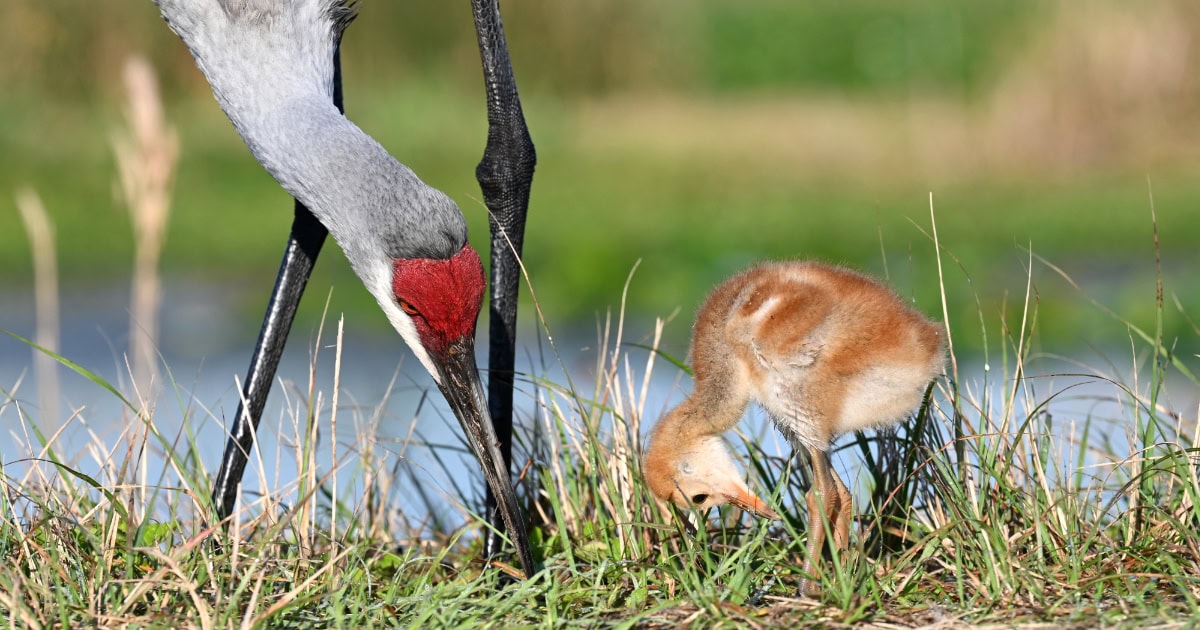
Photo: Mother Sandhill Crane and her colt – Orlando Wetlands