
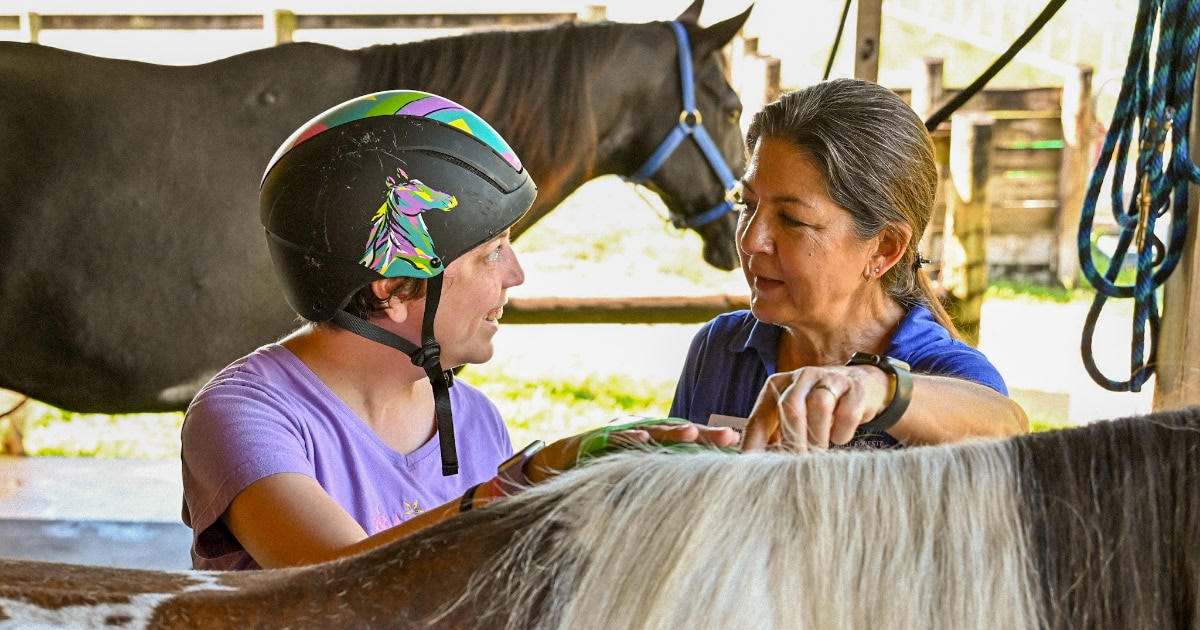
An instructor works with a Special Equestrian. A case manager slides a warm meal across a folding table. A volunteer smiles, then wipes a client’s face. A nonprofit’s day is full of small wins that never fit neatly in a spreadsheet.
Numbers still matter, of course. Grants require them. Boards ask for them. Yet nonprofit impact is also human, and humans believe what they can see.
That’s why photography belongs in your reporting and fundraising toolkit. Strong, respectful photos help you show change clearly, build trust faster, and keep your story consistent across campaigns. Just as important, ethical photography helps protect the people you serve.
In this post, you’ll learn why photos communicate results so well, what to capture for a complete impact story, how to do it with dignity and consent, and how to reuse images across fundraising, reporting, and recruiting without burning out your team.
Photography shows change in a way reports can’t
A report asks people to slow down and focus. A photo meets them where they are, even when they’re busy. That’s the first reason photography works so well for nonprofits. It communicates in a single glance, then invites a deeper read.
Donors often skim. Board members juggle priorities. Program partners may only have minutes. In those moments, a clear image can carry the weight of a paragraph. It can also reduce confusion. When supporters can see the setting, the tools, and the faces, they understand what their money supports.
Photography also helps you show progress over time without staging scenes. A simple “before, during, after” pattern makes growth feel real:
- A once-empty shelf, then volunteers stocking it, then a client leaving with a full bag.
- A damaged trail, then a cleanup crew at work, then a safe path with fresh signage.
- A quiet classroom, then tutoring in session, then a student presenting a project.
Time-stamped photos paired with short captions can support annual reports, grant updates, and simple program dashboards. They don’t replace data. They support it, because they show what the data means in real life.
Still, emotion needs boundaries. Photos can move people without turning hardship into a spectacle. Choose images that respect your community. Aim for honesty, not shock. When in doubt, show strength and care alongside need.
Build trust with donors, grantmakers, and your community
Trust grows when supporters feel they can “look inside” your work. Clear, consistent photos reduce doubt because they show that programs exist, staff show up, and resources reach real people.
Focus on images with context. That means showing the space, the process, and the outcome, not just a face. For example, photograph staff setting up, volunteers coordinating, and participants using what they received or learned. Those details quietly say, “This is real, and we handle it with care.”
Captions do a lot of heavy lifting here. A respectful caption can add clarity without oversharing. When it’s safe, include names, dates, and locations. When it isn’t safe, use general descriptions (like “after-school program in Indian River County”) and keep identities protected.
A simple format works well: one sentence for what’s happening, one sentence for why it matters. Over time, that consistency becomes part of your organization’s voice.
Turn hard-to-explain outcomes into visible proof
Some outcomes resist charts. Confidence. Belonging. A sense of safety. New skills that show up in posture and focus, not in a tidy percentage.
Photography helps you show these changes in a grounded way. You can capture a learner standing at the front of a room, hands steady on note cards. You can show a client using a new tool independently. You can document a community event running smoothly, with neighbors talking and kids playing without tension.
Repeat photos also matter. When it makes sense, take the same photo from the same angle over time. A garden bed filling in month by month tells a story without a single staged moment. The same idea works for renovations, habitat restoration, and even consistent program nights.
The key is patience. Don’t chase dramatic images every time. Collect steady proof, one honest frame at a time.
What to photograph to tell a complete impact story
Many nonprofits avoid photography because it feels like “one more thing.” The fix isn’t a bigger workload. It’s a clearer plan.
Think of your images as a story arc you can reuse. You’re not only collecting pretty pictures. You’re gathering evidence of need, work, results, and what happens next. When you cover the full arc, your annual report writes itself faster, and your fundraising appeals feel less abstract.
A practical approach is to capture both wide shots and close details. Wide shots show place and scale. Close shots show hands, tools, notes, and small acts of care. Together, they make your work feel present.
Add short quotes when you can. One sentence from a participant, a volunteer, or a staff member can anchor a caption in plain truth. Keep it simple and let the photo do the rest.
Finally, treat your images like program data. Build a shared library with consistent file names and a few basic tags, such as program, date, and location. That small habit saves hours later, especially during grant season.
Capture the full arc: need, action, outcome, and next steps
If your team only has time for a few key moments, use “beats.” These beats help you avoid a gallery full of random smiles that don’t explain anything.
Here are five photo beats that tell a complete impact story:
- Context of the challenge: the space, the conditions, the barrier, or the gap.
- Staff and volunteers in action: listening, organizing, teaching, building, delivering.
- Participant experience: engaged moments, not forced poses.
- Outcome in use: the tool being used, the skill practiced, the support applied.
- Next steps and continuity: follow-up visits, planning boards, restocking, and training.
Real moments usually land best. Still, one clean team photo can help when stakeholders need it, for example, on a press page or a sponsor recap. Keep it quick, then return to documenting the work as it unfolds.
Show the people behind the work, not just the program
Programs don’t run on mission statements. They run on people who plan, train, coordinate, clean up, and check in again tomorrow.
Photograph the “invisible” work. Capture staff reviewing notes, volunteers learning a process, partners meeting at a community table, or a quiet moment of reassurance in a hallway. These images honor your team, and they help donors understand where effort goes.
Participant choice matters just as much. Not everyone wants to be photographed, even when they support your mission. Offer options and respect them without debate.
When portraits make sense, keep them relaxed. Use natural light near a window or an open door. Choose simple backgrounds. Talk first, shoot second. A calm conversation often creates the expression you’re hoping for, because people feel seen instead of “used.”
A good nonprofit photo doesn’t take someone’s story, it shares it with their permission and pride.
Ethics first: dignity, consent, and safety in nonprofit photography
Impact photos carry power. They can open wallets and shape public opinion. That’s why ethics can’t be an afterthought.
Start with dignity. Ask yourself, “Would I want my family shown this way?” If the answer stings, choose a different frame.
Consent is next, and it needs to be informed. People must understand how you plan to use the images. They also need a real ability to say no. Services should never depend on agreeing to a photo.
Safety is the third pillar. Photos can reveal identities, locations, routines, and relationships. That risk rises with minors, survivors, people in health crises, and communities facing stigma or harm. In those cases, consider safer options like hands-only photos, silhouettes, photos from behind, or close-ups of tools and work.
Written releases often help, especially for planned sessions and public-facing campaigns. Still, verbal consent matters in the moment, because circumstances change. Someone may sign a form and then feel unsafe later. Make space for that.
Create consent that feels real, not rushed
Ask in plain language. Skip legal tone when you’re speaking to a participant. Try something like, “We take photos to show donors what this program does. Is it okay if I take a few pictures? You can say no, and it won’t change your services.”
Offer choices right away. Some people are fine with a group photo but not a close-up. Others will agree to internal reports but not social media. When possible, let them review an image on the camera screen. That small step often builds comfort, because they can see what you see.
It also helps to assign one staff member to manage releases and track restrictions. Keep notes on who said yes, what they approved, and what you should avoid. That prevents mistakes later, when a different staff member pulls images for a campaign.
Avoid harm: common photo mistakes that can break trust
A few common missteps can undo years of community confidence. Here are pitfalls to watch for, with quick fixes:
- Pity-based angles: Don’t shoot down on people or hunt for tears. Instead, photograph eye-level moments of care and strength.
- Private info in the frame: Clipboards, medical charts, name tags, and addresses sneak into backgrounds. Scan the edges before you press the shutter.
- Over-editing: Heavy filters can change skin tone and reality. Keep edits light and consistent.
- Posting before permission: A “great shot” isn’t worth a breach of trust. Confirm consent before publishing.
- One face representing a whole group: Don’t let one person become the symbol for everyone’s struggle. Build a broader library, and vary whose stories you share.
Ethical photography isn’t only about risk reduction. It’s also a way of saying, “You matter more than our marketing.”
Put your photos to work across fundraising, reporting, and recruiting
A well-planned photo day can feed months of communication. The trick is to plan for reuse, then publish with restraint.
Start by choosing a clear purpose for each batch of images. Some photos should support fundraising, like a “hero” image that shows the outcome in use. Other photos should support reporting, such as a process image showing staff delivering the program. Recruiting photos should show teamwork, training, and the real environment volunteers will step into.
Consistency beats volume. Aim for a small set of strong images you can return to. For example, pick 10 hero images each quarter. Write short captions while details are fresh. Store the originals safely, then export web-sized versions for email and social media.
It also helps to build simple pairs: one image plus one number. A photo of tutoring plus “34 students served this month” feels grounded and easy to trust. Your data gets a face, and your photo gets meaning.
If you plan the story once, you can tell it ten times without repeating yourself.
A simple system to keep photos organized and easy to reuse
Organization sounds boring until you’re assembling a grant report at 11 p.m. Then it feels like relief.
Use a shared folder structure by year, program, and date. Name files in a consistent pattern, such as: YYYY-MM-DD_program_location_subject. That naming style keeps photos searchable, even when staff changes.
Track rights and restrictions in a simple spreadsheet. Include who is in the photo, consent type, allowed uses (internal only, web, print), and any notes (no names, no school sign visible, no location tag).
Don’t forget accessibility. Write alt text for web use that describes what’s happening, not only who is present. Strong captions also help, because they guide the viewer toward the right meaning. Keep both short. Plain language works best.
When your system is simple, people will actually use it. Then your photo library becomes an asset instead of a forgotten folder.
My final thoughts
Spreadsheets show scale, but photos show life. When nonprofits document transformational impact through photography, supporters understand faster, believe more deeply, and stay connected longer. At the same time, the camera carries responsibility, so consent, dignity, and safety come first.
Start small. Choose one program and capture one story arc, from need to next steps. Set a basic consent process, and assign someone to track permissions. Then repeat monthly or quarterly until you’ve built a library you can trust.
A year from now, you won’t only have better images. You’ll have clearer proof of the care your team brings to the work, day after day.
Photo: Executive Director Karen Johnson shares a quiet moment with a student preparing for a riding lesson at Special Equestrians of the Treasure Coast. Each session builds confidence, strength, and connection — one ride at a time.