
A professional headshot is often the first handshake. It appears on LinkedIn, in your company bio, on a speaker page, or in a press kit. Before anyone reads your title, they notice your face, your posture, and what you chose to wear.
The goal isn’t to look like you’re headed to a wedding or wearing a “business costume.” It’s simpler than that. You want to look like the best version of your everyday professional self, the person a client would trust in a meeting.
This guide provides quick, practical rules for what to wear for a professional headshot, with easy ways to match your outfit to your role, industry, and personal style.
Start with the job you want and dress for that room
The right headshot outfit depends on where the photo will live. A realtor’s headshot has a different job than a therapist’s. A law firm bio needs a different feel than a creative agency team page. Your outfit should support the story your audience already expects.
A simple rule works in almost every industry: level up one notch from what you wear at work. If your daily look is a polo, a crisp button-down may be the “one notch.” If you wear a button-down most days, add a blazer. If you already wear a blazer, upgrade the fabric and fit, and keep everything clean and calm.
If you’re doing company headshots, consistency matters. A team page looks sharper when everyone feels like they belong in the same building. That doesn’t mean matching outfits. It means similar polish, similar formality, and no one person standing out for the wrong reason.
Choose a clear vibe: classic, modern, or creative
Before you pick a shirt, pick a vibe. Think of it like choosing a font for a logo. The message changes fast.
Classic looks like a blazer, a button-down, simple jewelry, and tidy hair. It reads steady, clear, and dependable. Modern looks like clean lines, a solid knit top, a sharp collarless jacket, or a sleek button-down with no extra fuss. It reads current and confident. Creative can include richer colors, tasteful patterns, or a signature accessory (such as bold glasses or a scarf worn as a collar layer). It reads expressive, but still professional.
Match the vibe to your audience. A financial planner can still wear color. A designer can still look polished. The best headshots sit in the middle of “memorable” and “trustworthy.”
Match your neckline and layers to the crop
Most headshots are cropped from mid-chest up. That means the neckline is doing a lot of work. It frames your face like a picture frame on a wall.
Crew necks, modest V-necks, and collared shirts tend to photograph well. They create clean lines and keep attention on your eyes. Deep V-necks pull the eye downward, and they can look more casual than you planned. Bulky scarves and big lapels can crowd the frame and steal the spotlight.
If you’re unsure, add a structured layer. A blazer, a jacket, or a neat cardigan gives shape on camera. Cameras can soften edges, so structure helps your shoulders look defined, and your posture look stronger.
Pick colors and fabrics that flatter on camera, not just in the mirror
A mirror tells one story. A camera tells another. Cameras react to contrast, shine, and texture. They also freeze fine details, such as lint, wrinkles, and fabric ripples.
Solid colors usually win for professional headshots because they keep the focus on your face. Patterns can work, but only when they’re calm and not fighting for attention. Fabric choice matters more than most people think, because studio lights (and even bright February sun) can turn certain materials shiny fast.
If you’ve ever seen a headshot where the shirt looks bright, and your face looks tired, that’s often a color or fabric issue. The goal is balance: enough contrast to frame your face, and enough softness to keep the image approachable.
Best colors for professional headshots (and what to skip)
Mid- to deep solids tend to appear strong and timeless. Think navy, charcoal, forest green, burgundy, deep teal, and medium blue. Soft white and cream can also work, especially with a jacket.
Pure black can look flat in photos, especially against dark backgrounds. It can also swallow detail, making the outfit appear as a dark block. Bright white can blow out highlights under studio lighting, making the shirt pull focus. Neon colors and very bright shades can reflect off your skin and create odd color casts.
Pastels can work when paired with contrast. A pale blue shirt under a navy blazer conveys a professional yet friendly impression. A pastel top without a jacket can look washed out, depending on your skin tone and background.
Patterns, logos, and texture rules that keep things timeless
Patterns are risky because cameras compress detail. Small, tight patterns (like tiny checks or thin stripes) can create an unusual “shimmer” effect in photos. Big bold prints can distract, especially in a head-and-shoulders crop.
Logos are another trap. A large brand mark can date the photo and draw attention away from your expression. If you need branded apparel for your role, choose the most subtle option you have, and keep everything else simple.
Texture is your quiet helper. Matte knits, wool blends, cotton, and simple weaves add depth without shouting. Be cautious with satin, shiny polyester, and clingy jersey. They reflect light, show every crease, and can look sweaty even when you’re not. Wrinkle-prone fabrics can also betray you the moment you sit in the car.
Make sure your outfit plays nice with the background
Most headshot backgrounds fall into a few buckets: light gray, white, a softly blurred office, or outdoors. Each one changes how your outfit reads.
If the background is light, choose a darker top to create contrast and keep your face framed. If the background is dark, pick a mid-tone or lighter top so you don’t blend in. Outdoors, earthy tones often look natural, while very bright colors can feel loud against greens and the sky.
If your company has brand colors, you can nod to them without matching exactly. A deep blue blazer might echo a logo. A green top can hint at a brand palette. The photo should feel like you belong on the site, not like you’re trying to become the logo.
Build a camera-ready outfit, head to toe, even if only the top shows
It’s tempting to only style what the camera sees. Still, dressing fully helps you stand taller and feel more put-together. Your posture changes when you’re in slippers. Your expression tightens when you’re tugging at a waistband. Comfort shows up on camera.
High-resolution headshots also catch small details. A twisted necklace, a wrinkled collar, lint on a blazer, or a strap peeking out can become the only thing people notice. You want your outfit to be the stage, not the main character.
Fit is everything: shoulders, sleeves, and waistlines
Fit beats price every time. The camera adds visual width, so tailored clothing reads clean and confident. Tight clothing pulls and bunches. Oversized clothing makes you look smaller inside it.
Start with the shoulders. The seam should sit right at the edge of your shoulder bone. If it droops, you’ll look sloped. If it sits too far in, it can look restrictive. Sleeves shouldn’t bunch at the wrist, and collars should lie flat.
Button-downs need extra attention. If buttons pull or gape at the chest, the camera will find it. A quick trip to a tailor can fix a blazer sleeve length, take in a waist, or adjust a shirt for a better line. Small changes make a big difference in a headshot.
Accessories, glasses, and jewelry: keep the focus on your face
Accessories should support your face, not compete with it. A helpful rule is one hero piece. Pick one item that adds personality, then keep the rest quiet.
A simple watch, small earrings, or a clean necklace can look polished. Oversized statement jewelry can reflect light and draw the eye away from your expression. Noisy bangles can also be distracting, especially if you move your hands during the shoot.
If you wear glasses daily, wear them for the headshot. People want to recognize you. If possible, use anti-reflective lenses and bring a clean cloth. Blue-light coatings can throw bright reflections, so test your glasses under a lamp at home. If reflections are bad, talk with the photographer about the angle and lighting before you start.
Grooming and small fixes that make a big difference
Think of grooming as photo insurance. You don’t need a new haircut or dramatic makeup. You need to be clean, controlled, and camera-ready.
Bring a lint roller, even if your outfit looks perfect at home. Pet hair loves blazers. A small steamer (or a quick steam at the studio) can save a wrinkled collar. A stain pen is worth its weight in gold, because coffee finds white shirts like a magnet.
Face shine is another common issue under lights. Blotting papers or a light dusting of matte powder can help, for any gender. Keep makeup simple and natural: even tone, soft definition, and skip heavy shimmer that catches the flash. For hair, choose a style that stays put without constant touching. Stray strands can cast little shadows, and those shadows can read like stress.
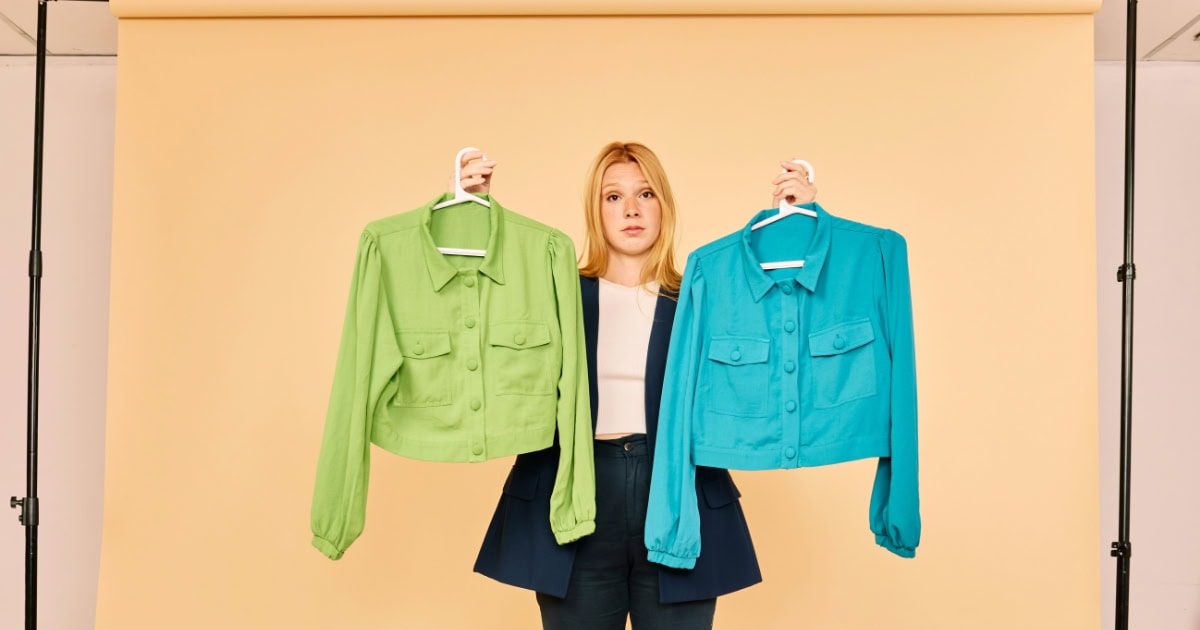
Bring options to the shoot so you can choose the best look on set
Even with good planning, the camera has opinions. A color that looks great in your bedroom might appear too bright under strobe lighting. A neckline that feels fine might sit oddly once you’re posed. Bringing options lowers the pressure. It also helps your photographer guide you toward what works best on that specific background and lighting setup.
A smart approach is to test outfits before the shoot. Take quick photos on your phone in natural light, front-facing if you can. Look for shine, wrinkles, and whether your face pops or fades. If you’re part of a team headshot day at the office, share basic guidelines in advance so everyone shows up with a consistent level of polish.
A simple headshot outfit kit you can pack in 10 minutes
Bring a small set of backups and tools. You don’t need a suitcase, just enough to handle surprises.
- Two tops (one darker, one lighter)
- One jacket or blazer for structure
- Backup undershirt (or camisole) to prevent show-through
- Tie (if you wear one), plus a basic tie bar if that’s your style
- Safety pins for gaping fabric or a quick fix
- Lint roller and a small brush or comb
- Blotting papers or matte powder
- Deodorant (clear or low-residue)
- Collar stays if your shirt uses them
- Mini sewing kit and stain remover pen
- One extra jewelry option that’s simpler than your first choice
Transport clothes on a hanger whenever possible. If you must fold, fold carefully and hang everything upon arrival.
Last checks before the camera clicks
Do a quick check right before you step in front of the lens. Small adjustments take seconds and can save retouching later.
Smooth your collar and straighten your lapels. Empty your pockets to prevent fabric from pulling. Center your tie and check the knot height. Make sure necklaces aren’t twisted and that earring backs are secure. If hair is falling into your face, move it back enough to keep shadows off your eyes. Look for underarm sweat marks, especially in fitted shirts, and confirm nails are clean. Then request a quick test shot so you can adjust the fit and shine before the real set begins.
Here’s what you should take away:
When you’re deciding what to wear for a professional headshot, keep it simple: dress for the role you want, choose solid colors and matte fabrics, and prioritize fit. Plan your outfit a few days early, try it on under good light, and bring a backup so you’re not stuck if something feels off.
A strong headshot doesn’t just look nice; it supports your brand every time it appears online. If you’re updating a website, refreshing a brand, or planning a team page, Jones & Jones Advertising can help align your visuals with the bigger marketing story so your first handshake lands the right way.